






Introduction
Our daily behavior is not as random as it may seem. Every action, whether conscious or subconscious, is part of a larger system of habit loops. Betanden, a concept rooted in behavioral science and neuroscience, offers a framework for understanding how repetitive behaviors become automated patterns that impact everything from productivity to emotional regulation and health.
This article breaks down Betanden, its foundational principles, and provides practical steps to reshape your behavior by understanding the forces that drive it. Whether you’re looking to improve your daily habits, boost mental health, or cultivate better productivity, understanding Betanden is the first step toward intentional, long-lasting change.
What is Betanden? Understanding Habit Loops and Their Influence on Behavior
Betanden: The System Behind Your Behaviors
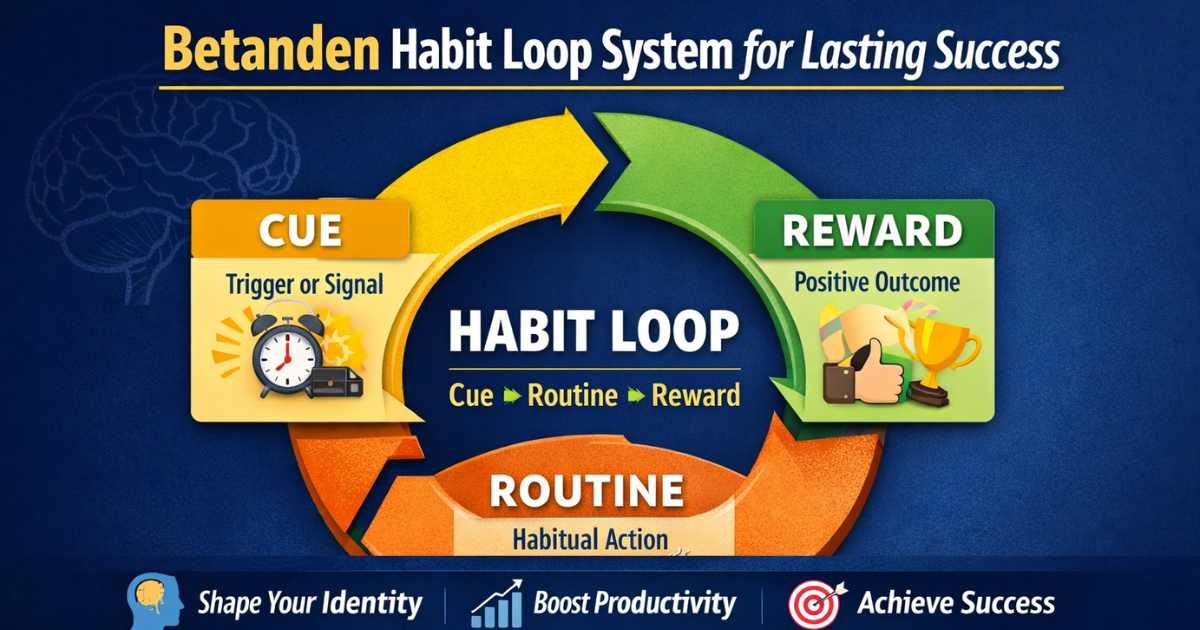
At its core, Betanden refers to the systemic structure that drives repetitive behaviors—habit loops. These loops are not random; they form a predictable cycle consisting of three main components: cue, routine, and reward. Once these loops are established, they become automatic and reinforced over time.
The most important thing to note about Betanden is that it’s not just about individual habits. Instead, it’s the framework that connects and shapes these habits, driving long-term behavior patterns that influence your identity, health, and overall success. Betanden operates below the level of conscious awareness, making it challenging to recognize and break unless you actively design and change it.
Components of Betanden
- Neurological Systems – The basal ganglia and prefrontal cortex are the primary brain regions involved in habit formation and reinforcement.
- Cue-Routine-Reward Cycle – The habit loop starts with a cue that triggers a routine, followed by a reward that reinforces the behavior, making it more automatic.
- Self-Concept and Identity – Our self-identity influences and is reinforced by the habits we form. Betanden creates loops that shape who we believe ourselves to be.
- Environmental Context – The surroundings—both physical and social—act as cues that initiate behavior and reinforce habit formation.
The Neuroscience of Betanden: How Your Brain Automates Habits and Behavioral Loops
How Habit Loops Are Formed in the Brain
The brain’s role in Betanden is foundational. The basal ganglia, the part of the brain responsible for habit formation, automates repetitive actions. This process begins when you engage in a behavior, and over time, the neural circuits related to that behavior become stronger, making the action increasingly automatic.
This is a neuroplasticity process, where neural pathways are rewired through consistent repetition. The brain learns to conserve energy by automating tasks, making it easier to perform them without needing to think. While this is incredibly efficient, it also means that negative habits can become deeply embedded if not consciously addressed.
Stages of Neural Automation in Betanden
- Cue (Trigger) – The stimulus or event that starts the habit loop. This could be anything from a specific time of day to an emotional feeling.
- Routine (Behavior) – The habitual action you take in response to the cue. Over time, this behavior becomes ingrained and automatic.
- Reward (Reinforcement) – The positive outcome that strengthens the connection between the behavior and the cue, encouraging the loop to repeat.
By understanding how the brain rewires itself, you can begin to break free from negative habits and form new, positive ones. The key is to interrupt the loop at any stage, whether it’s by changing the cue, the routine, or the reward.
Betanden and Identity: The Power of Self-Perception in Shaping Habits
Identity as the Driving Force Behind Behavior
Our self-concept is a powerful force in shaping our behavior. According to Betanden, your identity plays a significant role in how habits are formed and reinforced. If you see yourself as a disciplined person, you are more likely to engage in behaviors that align with that identity. Conversely, if you view yourself as lazy or undisciplined, your actions will reinforce that belief, creating a self-perpetuating cycle of behavior.
Betanden emphasizes the importance of identity-based habits—the idea that your habits and actions reflect and reinforce the person you believe yourself to be. Changing your identity is the most effective way to change the behavior that no longer serves you.
Shifting Identity to Create Positive Change
- Behavioral Feedback Loop – Every time you act in alignment with your new identity, you reinforce that self-concept, making it more solidified.
- Transforming Self-Concept – To break free from negative Betanden loops, the first step is to change your identity. If you want to become more productive, begin by identifying yourself as someone who prioritizes focus and completes tasks efficiently.
- Aligning Actions with Identity – Actions reinforce identity, so act in ways that reflect the person you wish to become. Over time, this new identity will be reinforced through consistent action.
Environmental Design: Structuring Your Surroundings to Reinforce Positive Betanden Habits
The Impact of Environment on Habit Formation
Your environment plays a significant role in shaping your behavior. Betanden shows that physical and social cues in your surroundings trigger habits, whether positive or negative. The people you interact with, the layout of your workspace, or even your home environment all act as subtle influencers on your behavior.
To change or reinforce your Betanden loops, you need to optimize your environment. A well-designed environment makes it easier to engage in positive behaviors and harder to indulge in negative habits.
Tips for Designing Your Environment for Positive Betanden
- Eliminate Temptations – Remove unhealthy snacks, distractions, or digital temptations. Less likely to be distracted or engage in negative behaviors.
- Create Positive Cues – Set up visual cues, such as motivational quotes, reminders, or healthy snacks. Encourages healthy habits and reinforces positive routines.
- Simplify Access to Healthy Habits – Organize your space to encourage good habits (e.g., workout gear visible). Facilitates easier engagement in positive actions.
By consciously designing your environment to reduce friction for good habits, you create a space that naturally reinforces positive Betanden loops.
Breaking Negative Betanden: How to Interrupt the Habit Loop and Create Change
Strategies for Breaking Negative Betanden Loops
Breaking a negative habit loop doesn’t require sheer willpower alone—it requires a strategic intervention to disrupt the habitual process at key stages. The loop consists of the cue, the routine, and the reward, so breaking it involves modifying one or more of these components.
How to Break Negative Betanden Loops
- Identify the Trigger – Recognize what causes the unwanted behavior to occur. This could be a specific time of day, an emotional state, or an external situation.
- Replace the Routine – Instead of falling into the old pattern, substitute it with a healthier action. If stress triggers overeating, replace it with a relaxation technique or a short walk.
- Reinforce the Reward – The new routine should still provide a reward that feels satisfying. If comfort is the reward, substitute comfort food with a soothing activity like meditation.
By strategically interrupting negative loops and replacing them with positive behaviors, you can reprogram your Betanden system for success.
The Compounding Effect of Betanden: Small Actions, Big Results
How Consistent Behavior Leads to Long-Term Change
One of the most powerful aspects of Betanden is its compounding effect. Small, consistent actions—whether it’s exercising, eating healthily, or working on personal goals—accumulate over time, resulting in transformational changes. These small daily habits, when repeated, create long-term improvements that have a greater impact than sporadic bursts of effort.
Examples of the Compounding Effect of Betanden
- Daily Exercise – Improved cardiovascular health and increased energy. A 20-minute workout every day can drastically improve health over months.
- Mindful Eating – Better digestion and sustained energy levels. Consistently choosing healthy meals can result in long-term weight management.
By focusing on small but consistent actions, you can leverage the power of compounding to create lasting, positive changes.
Conclusion
Mastering Betanden means understanding the systems that drive your behaviors and designing them to align with your goals. Whether you aim to improve your health, productivity, or emotional regulation, Betanden offers a powerful framework for shaping your habits. By focusing on the neurological, environmental, and identity aspects of habit loops, you can break negative patterns and reinforce positive behaviors that drive long-term success. Intentional, consistent action is the key to mastering your Betanden system.
FAQs About Betanden
What is Betanden and how does it affect my behavior?
Betanden refers to the interconnected system of behavior that includes cues, routines, and rewards. It shapes our long-term habits, influencing our health, productivity, and emotional well-being.
Can I change my Betanden habits for the better?
Yes, by identifying your cues, replacing negative routines, and designing your environment to support positive behaviors, you can rewire your Betanden system for success.
What role does identity play in Betanden?
Your self-identity plays a crucial role in habit formation. By aligning your behavior with the identity you want to build, you can reinforce your desired habits and make them automatic.
How can I design my environment to support positive Betanden?
By removing distractions, adding positive visual cues, and simplifying access to healthy habits, you can create an environment that reinforces the behaviors you want to develop.
How do I start applying Betanden in my life?
Start by tracking your current behaviors, identifying the cues and rewards that drive them, and then adjusting your routine to support healthier, more productive habits.
Read more informative articles on stream easts.com