





The way people watch sports has changed dramatically with the growth of digital streaming platforms. In the past, television channels were the primary source for watching live matches, but today millions of sports fans prefer online streaming services. Platforms such as sports apps, OTT services, and official broadcasting websites allow viewers to watch games on smartphones, laptops, tablets, and smart televisions from almost anywhere.
Despite these advantages, the quality of sports streaming depends heavily on internet performance. A slow or unstable connection can cause buffering, lagging video, or sudden drops in picture quality. These interruptions can ruin the excitement of live sports, especially during crucial moments of a match.
Understanding the right internet speed for sports streaming helps viewers avoid these issues and enjoy smooth, high-quality video playback. In this detailed guide, we will explore how internet speed affects sports streaming, the recommended bandwidth for different resolutions, and practical ways to improve streaming performance.
Why Internet Speed Is Crucial for Watching Sports Online
Internet speed determines how quickly data can travel between a streaming server and your device. When watching sports online, large amounts of video data must be delivered continuously in real time. Because sports broadcasts include fast movement, crowd scenes, and rapid camera changes, they require a steady and reliable flow of data.
If the internet speed is too slow, the streaming platform may not receive video data quickly enough. As a result, the video player may pause to buffer additional data before continuing playback. Frequent buffering can make it difficult to follow the match and can disrupt the excitement of live sports viewing.
Another important factor is video quality adjustment. Most streaming platforms use adaptive streaming technology that automatically lowers the video resolution if internet speed drops. While this prevents the video from stopping completely, it often results in blurry or pixelated images.
A fast and stable internet connection ensures that video streams are delivered smoothly and consistently. This allows viewers to watch sports events with clear visuals, smooth motion, and minimal interruptions.
How Bandwidth Affects Live Sports Streaming Quality
Bandwidth refers to the amount of data that can be transmitted through an internet connection within a certain time period. It is typically measured in megabits per second (Mbps). Higher bandwidth allows more data to be transferred simultaneously, which is essential for high-quality video streaming.
When watching sports online, the streaming service sends a continuous flow of video data to your device. If the available bandwidth is not sufficient, the video player may struggle to keep up with the incoming data stream. This can result in buffering, delays, or automatic reduction in video quality.
Sports broadcasts often require higher bandwidth than many other types of video content. This is because sports events include fast movement and complex visuals that require higher frame rates and larger data files. The more detailed the video, the more bandwidth is required to stream it smoothly.
Understanding bandwidth requirements helps viewers select the correct streaming quality for their internet connection. This ensures that the video can play smoothly without interruptions or quality loss.
Internet Speed Requirements for Standard Definition Streaming
Standard Definition (SD) streaming typically uses a resolution of around 480p. While this resolution does not provide the sharpest image quality, it remains a practical option for viewers with slower internet connections or limited data plans.
To stream sports in standard definition, an internet speed of about 3 Mbps is generally sufficient. This speed allows the video to load smoothly under normal conditions and prevents frequent buffering interruptions.
SD streaming works best on smaller screens such as smartphones and compact tablets. On larger displays like televisions or desktop monitors, the lower resolution may appear slightly blurry or less detailed compared to HD formats.
Although SD quality is not ideal for viewers who want the highest visual clarity, it can still provide a stable viewing experience. It also consumes less internet data, making it suitable for users who need to manage their data usage carefully.
Recommended Internet Speed for High Definition Sports Streaming
High Definition (HD) streaming offers a significant improvement in visual quality compared to standard definition. HD video typically uses resolutions such as 720p or 1080p, providing sharper images and better detail during live sports events.
To watch sports comfortably in HD quality, an internet speed between 5 Mbps and 8 Mbps is usually recommended. This speed allows the streaming platform to deliver high-quality video without frequent buffering.
HD streaming is ideal for devices such as laptops, tablets, and medium-sized televisions. The improved image clarity makes it easier to follow player movements, ball trajectories, and score graphics during the game.
Many sports fans prefer HD streaming because it offers an excellent balance between video quality and bandwidth usage. It provides a more immersive viewing experience without requiring extremely high internet speeds.
Internet Speed Requirements for Full HD Streaming
Full HD streaming uses a resolution of 1080p, which provides sharper visuals and improved detail compared to standard HD. This higher resolution enhances the viewing experience by delivering clearer images and smoother motion during fast-paced sports events.
For smooth Full HD streaming, an internet speed of approximately 10 Mbps to 15 Mbps is typically recommended. This level of bandwidth ensures that the video stream remains stable and maintains consistent quality.
Full HD is particularly useful for watching sports such as football, cricket, basketball, or hockey. The higher resolution makes it easier to observe small details such as player positioning, ball movement, and tactical plays.
When viewed on larger screens like smart TVs or desktop monitors, Full HD streaming provides a much more detailed and engaging sports viewing experience.
Internet Speed Requirements for 4K Ultra HD Sports Streaming
4K Ultra HD streaming represents the highest video resolution currently available on many streaming platforms. With a resolution of approximately 2160p, 4K video delivers extremely sharp images, vibrant colors, and impressive detail.
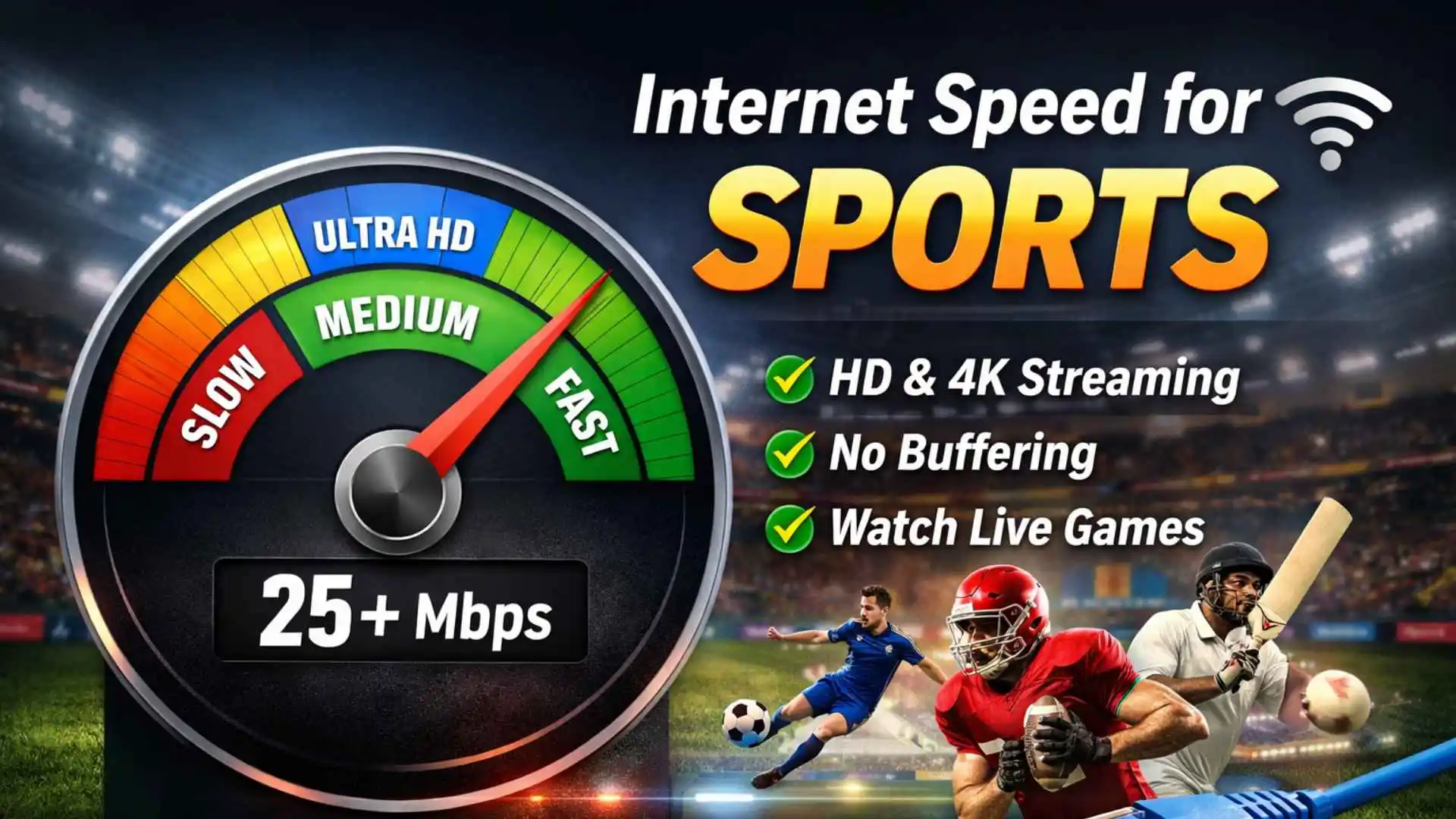
However, 4K streaming requires significantly more bandwidth than lower resolutions. Most streaming platforms recommend a minimum internet speed of 25 Mbps or higher for smooth 4K playback.
Because 4K video contains far more pixels than HD video, it requires a much larger amount of data to be transmitted each second. Any fluctuations in internet speed can lead to buffering or automatic reduction in video quality.
4K streaming is best suited for viewers with high-speed broadband or fiber-optic internet connections. It is especially effective when watching sports on large smart TVs that support ultra-high-definition displays.
Factors That Can Reduce Internet Performance During Streaming
Even if you have a fast internet plan, several external factors can affect streaming performance. Understanding these factors can help viewers identify problems and improve their streaming experience.
Network congestion is one of the most common causes of slow streaming. When multiple devices share the same internet connection, the available bandwidth is divided among them. Activities such as downloading large files or streaming videos on other devices can reduce streaming performance.
Wi-Fi signal strength is another important factor. Devices located far from the router may receive weaker signals, which can result in slower speeds and unstable connections.
The performance of the streaming device itself can also influence video playback. Older devices with limited processing power may struggle to decode high-resolution video streams efficiently.
Finally, the reliability of the internet service provider plays a major role. Some providers offer more consistent speeds and stable connections than others.
Practical Ways to Improve Internet Speed for Sports Streaming
There are several effective methods that viewers can use to improve their internet performance when streaming sports online. Simple adjustments to network setup and device usage can significantly reduce buffering and improve video quality.
One helpful step is placing the Wi-Fi router in a central location within the home. This allows the wireless signal to reach all devices more evenly and reduces areas with weak connectivity.
Using a wired Ethernet connection instead of Wi-Fi can also improve stability. Ethernet connections are less affected by interference and usually provide faster, more consistent speeds.
Another useful strategy is limiting background internet activity during live matches. Pausing downloads, software updates, and other streaming services can free up bandwidth for sports streaming.
Upgrading networking equipment, such as routers or modems, may also improve performance. Modern devices often support faster speeds and stronger wireless signals.
The Role of Latency in Live Sports Streaming
Latency refers to the delay between the live event and the moment it appears on a viewer’s screen. For live sports streaming, low latency is extremely important because fans want to watch the action as close to real time as possible.
High latency can cause broadcasts to appear several seconds behind the actual event. This delay can be frustrating, especially when viewers receive score updates from social media before seeing the action themselves.
Several factors influence latency, including network congestion, streaming server location, and internet connection type. Faster connections generally provide lower latency and more responsive streaming performance.
Fiber-optic internet connections are known for providing very low latency, making them ideal for live sports streaming. Streaming platforms also use advanced technologies to reduce delays and deliver broadcasts more efficiently.
Future Developments in Sports Streaming Technology
The future of sports streaming is closely linked to advancements in internet technology and digital broadcasting. As network infrastructure continues to improve, viewers will gain access to faster speeds and more reliable streaming services.
The expansion of fiber-optic networks is expected to make high-speed internet available to more households worldwide. Faster connections will allow viewers to stream sports in higher resolutions without buffering or interruptions.
The introduction of 5G mobile networks is also transforming sports streaming. With higher speeds and lower latency, 5G allows viewers to watch live matches smoothly on mobile devices even while traveling.
In the future, streaming platforms may introduce advanced features such as multiple camera angles, interactive statistics, augmented reality viewing, and virtual reality sports experiences.
Conclusion
Internet speed plays a fundamental role in determining the quality of the sports streaming experience. Faster and more stable connections allow viewers to watch matches in higher resolutions without buffering or playback interruptions.
For most viewers, HD or Full HD streaming provides an excellent balance between visual quality and bandwidth requirements. However, viewers with high-speed internet connections may choose 4K streaming for the most immersive viewing experience.
By understanding bandwidth requirements, improving network performance, and selecting the appropriate video quality, sports fans can enjoy smooth and uninterrupted streaming of their favorite matches.