










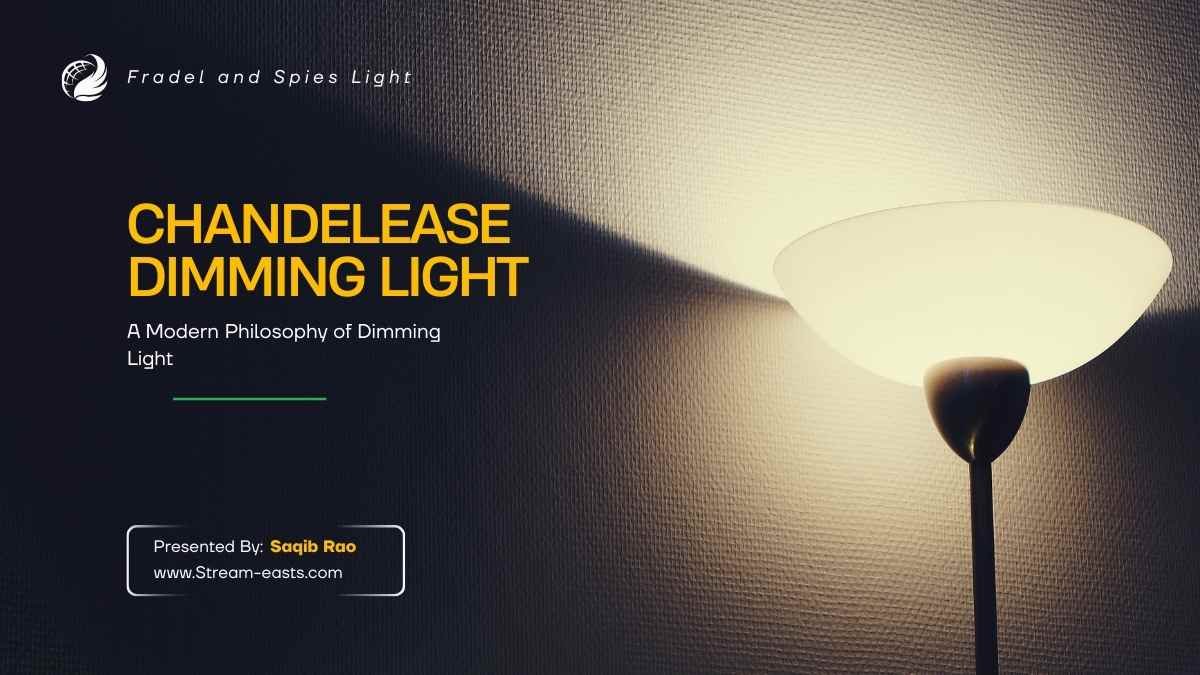
Introduction: Why Evenings No Longer Feel Like Evenings
In earlier times, evenings were not announced by clocks or calendars — they were felt. The lowering sun softened the world naturally. Sounds changed. Movements slowed. The environment itself guided people toward rest.
In contrast, modern evenings often feel indistinguishable from the rest of the day. Artificial lighting removes shadows, screens extend attention, and the nervous system remains alert long after productivity should end.
Chandelease emerges from this disconnect. It is not a rule, trend, or aesthetic label. It is a modern philosophy that recognizes light as a regulator of emotional rhythm — and proposes that how we dim light matters as much as when.
What Chandelease Truly Is (and What It Is Not)
Chandelease is best understood as a conscious relationship with fading light.
It is:
- A lifestyle philosophy
- A sensory transition practice
- An environmental cue for emotional closure
It is not:
- A holiday
- A religious observance
- A productivity system
- A decorative trend
Chandelease does not demand behavior change. Instead, it changes the conditions under which behavior unfolds.
“Find expert solutions that fit your aspirations—explore the article!”
The Missing Middle: Why Modern Life Feels Unfinished
One of the least discussed stresses of modern life is the absence of endings. Work ends digitally, but not emotionally. Evenings begin structurally, but not psychologically.
Without a transition:
- The mind continues problem-solving
- The body remains alert
- Rest feels forced rather than natural
Chandelease restores the middle moment — the quiet phase between engagement and rest.
Light as an Invisible Instructor
Light instructs the body without words. Its intensity, position, and warmth quietly influence posture, breathing, and attention.
- High, bright light promotes alertness and outward focus
- Lower, warmer light promotes inward attention and calm
Chandelease uses this invisible instruction deliberately. By allowing light to soften, it teaches the body that urgency is no longer required.
Why Chandelease Is Not Just “Low Lighting”
Low lighting alone does not create Chandelease. The defining factor is intentional transition.
| Element | Low Lighting | Chandelease |
|---|---|---|
| Purpose | Visual comfort | Emotional transition |
| Timing | Random | End-of-day |
| Experience | Static | Gradual |
| Effect | Cozy | Grounding |
Chandelease is not a static state — it is a process that unfolds.
Cultural Memory: Why Dimming Light Feels Instinctively Right
Across human history, light symbolized safety, continuity, and gathering. Firelight was not decoration; it was reassurance.
Seasonal traditions across Europe, Asia, and the Middle East used soft light to mark transitions — from harvest to winter, from activity to rest. La Chandeleur in France reflected this symbolic relationship with light, but the instinct itself is universal.
Chandelease modernizes this instinct without ceremony, allowing it to exist quietly in daily life.
The Role of Environment in Emotional Regulation
Most emotional practices focus on the mind. Chandelease focuses on environment first.
By changing surroundings:
- The nervous system responds automatically
- Emotional tone shifts without effort
- Stillness becomes accessible
This is why Chandelease feels gentle rather than demanding. It does not ask the mind to quiet — it creates conditions where quiet happens naturally.
Practical Chandelease: How It Appears in Real Life
Chandelease often happens without labels.
It may look like:
- Turning off ceiling lights before sitting down
- Letting lamps replace overhead brightness
- Allowing one warm light to remain as an anchor
- Accepting shadows instead of eliminating them
The practice is subtle — but its emotional impact is noticeable.
Designing Spaces That Allow the Day to End
Spaces designed for constant brightness resist rest. Chandelease-friendly spaces accept that not every moment requires clarity.
| Layer | Purpose | Emotional Effect |
|---|---|---|
| Ambient | Background presence | Safety |
| Accent | Depth and warmth | Comfort |
| Task | Minimal clarity | Ease |
This balance allows rooms to remain functional while becoming emotionally supportive.
Light Temperature as Emotional Context
Brightness determines visibility; temperature determines feeling.
- Cooler tones sharpen awareness
- Warmer tones soften perception
Chandelease favors warmth because it reduces contrast and visual tension, creating an atmosphere closer to dusk than daylight.
Emotional Effects of Practicing Chandelease
Chandelease does not promise transformation. It offers relief and permission.
Over time, people often notice:
- Less urgency in the evening
- Easier emotional disengagement from the day
- A stronger sense of personal space
- Greater comfort with quiet moments
These effects accumulate quietly — and meaningfully.
Seasonal Relevance Without Seasonal Limits
Chandelease feels especially comforting during darker months, but it is not seasonal by design. Its purpose is not to replace daylight, but to respond respectfully to its absence.
Whenever brightness stops serving emotional needs, Chandelease becomes relevant.
Chandelease and Human Connection
Soft environments change social behavior. People speak more slowly. Listening improves. Silence becomes less uncomfortable.
Chandelease gatherings are often:
- Small
- Unstructured
- Calm
They encourage presence rather than performance.
FAQs
Is Chandelease a formal practice?
No. It is an adaptable philosophy, not a rigid method.
Does Chandelease require specific lighting products?
No. Simple lamps, warm bulbs, or indirect light are sufficient.
Is Chandelease anti-modern or anti-technology?
No. It works within modern life rather than opposing it.
Can Chandelease be practiced every day?
Yes. Its value lies in repetition and ease.
Is Chandelease connected to sleep improvement?
Indirectly, but its primary focus is emotional transition rather than sleep optimization.
Conclusion: Letting Light Fade With Intention
Chandelease reminds us that endings deserve gentleness. The fading of light does not have to feel abrupt or empty — it can feel complete.
By allowing the environment to soften, we allow ourselves to soften with it.
Chandelease is not about darkness.
It is about ending the day with care.
Stay ahead with expert opinions—click here to get the full picture!
Disclaimer
This article is intended for informational and lifestyle purposes only. Chandelease is a conceptual approach to lighting and evening atmosphere, not a medical, psychological, or professional recommendation. Individual experiences may vary, and readers should use personal judgment when applying any ideas discussed. This content does not replace professional advice related to health, wellness, or home design.